Category: Heather Cottin

  • Voices From Syria, “Syria does Not Surrender”, says Mark Taliano.   Review of Mark Taliano’s Book, by Heather Cottin, Global Research, March 27, 2017

    Voices From Syria, “Syria does Not Surrender”, says Mark Taliano. Review of Mark Taliano’s Book, by Heather Cottin, Global Research, March 27, 2017

    Mark Taliano is a former teacher, an activist and writer who visited Syria in 2016. Taliano interviewed Syrians who have lived under US bombs for years. 

    The war in Syria is a NATO war. NATO has struck Syria not just with deadly unrelenting bombing, but has maintained total media control, deceiving millions of people around the world about NATO’s bloody unprecedented multinational invasion of Syria. Taliano says, “The war in Syria is brought to you by a sophisticated network of interlocking governing agencies that disseminate propaganda to both domestic and foreign audiences.”

    To order Mark Taliano’s Book click here, directly from Global Research

    He interviews a woman from the US who lives in Syria. She saw the Turkish-US armed Takfiri terrorists destroy her home and the entire village of Kesseb. They raped elderly women, dug up graveyard bones and fed them to hungry dogs. In Syria, Hillary Clinton is despised because she facilitated the transfer of arms from US puppet forces in Libya to the Turkish Army who then attacked Syria. And it was Clinton who campaigned to have the NATO lies about Syria spread through Western media, calling terrorist Al Qaeda and other takfiri murderers “moderates,” as they destroyed Syrian villages, cities, and killed and maimed tens of thousands of Syrian people. She and US/NATO propagandists vilified Syria’s legitimate and sovereign government.

    Taliano interviews many people, a man grateful to the Russians for coming to Syria’s aid. Another Syrian showed how calling the events in Syria a “civil war” is a lie:

    “The terrorists are sent by your government. They are al-Qaeda Jabhat al-Nusra Wahhabi Salafists Talibans and the extremist jihadists sent by the West, the Saudis, Qatar and Turkey. Your Obama and whoever is behind him or above him are supporting al-Qaeda and leading a proxy war on my country.”

    Syria’s War For Humanity

    Click image to order Taliano’s book 

    One of the strongest voices for Syria is Mark Taliano. He says, “Syria refuses to submit. That is why the West is taught to hate it and the rest of the world learns to love and respect it.” His friends’ testimony and video evidence demonstrate the horrors: kidnapped individuals being put in cages and used as human shields in town squares.” And still Syria does not surrender.

    “The Syrian War was planned … by the US since 2005. The Syrian soldiers and police were not even allowed to carry weapons until the “peaceful protesters” had slaughtered several hundreds of police and soldiers.”

    Taliano shows how US attack on the water system of Iraq in the 1990s was the template for the same illegal campaign in Syria. He duplicates one Defense Intelligence Agency document, “Iraq Water Treatment Vulnerabilities,” in 1991, which states,

    “THE ENTIRE IRAQI WATER TREATMENT SYSTEM WILL NOT COLLAPSE PRECIPITOUSLY, … FULL DEGRADATION OF THE WATER TREATMENT SYSTEM PROBABLY WILL TAKE AT LEAST ANOTHER 6 MONTHS.”

    Just as Iraq refused to bow to the will of the US, Taliano writes,

    “Syria insists on choosing its own path and refuses to be a vassal of US-led forces of predatory capitalism that siphons the world’s resources for the benefit of a transnational oligarch class. Violating international law, NATO countries have been involved in this blitzkrieg “regime change” invasion of sovereign countries.”

    Mark Taliano gives journalists, Syrians, and Facebook contributors credit for unmasking the truth. He cites Stephan Gowans who notes that the economies of all the countries the US/NATO has invaded have had a largely publicly-owned economies. He cites Vanessa BeeleyMichel ChussodovskyEva BartlettDr Shaabban, Ghali Hassan, Katherine Shackdam, Tim Anderson, and other courageous journalists reporting the NATO genocide.

    Nafeez Ahmed noted,

    “Total deaths from Western interventions in Iraq and Afghanistan since the 1990s…likely constitute around 4 million (2 million in Iraq from 1991-2003, … and could be as high as 6–8 million people when accounting for higher avoidable death estimates in Afghanistan.) …. US and UK “’refuse to keep track of the civilian death toll of military operations – they are deemed an “irrelevant inconvenience.”

    In addition to mass murder and destruction of food, health care facilities, schools and homes, in addition to the trail of destroyed archaeological treasures from Ancient Syria, Taliano notes:

    “Criminal mainstream messaging has created a state of mass political imbecilization,” stupefying the masses with lies.” They codified the deception. The US House of Representatives passed HR5181 ‘Countering Foreign Propaganda and Disinformation,’ “which calls for countering any “disinformation” – the truth – that escapes from Syria. The US funds “Civil Society” groups to do official disinformation work. The “National Endowment for Democracy, the CIA, Mossad, etc., as well as oligarch-funded foundations, are all embedded with the terrorists … are the sources … for corporate/mainstream media “news” stories.”

    Dr. Joseph Saadeh of Maaloula said to Mark Taliano:

    “The Wahhabi terrorists destroyed Syria by destroying everything in Syria like factories, like anything working to build the culture. And they’re supported by America and the European governments.”

    Voices from Syria is a small book with a big message. It would be perfect to use in a group of concerned activists meeting to discuss and disseminate the truth about US or NATO foreign policy in Syria. . It could be used in a classroom or in a library reading club.

    Mark Taliano is from Canada, one of the reliable military vassals in the NATO cabal. He severely criticizes his own government’s crimes, and the crimes of the ruling class who have urged their imperial forces to overthrow the legally elected government of Bashar-Al Assad. US and UK and Canada openly provide military and economic support for AlQaeda, Al Nusra, and the terrorists. The oil-rich rich monarchies of Qatar, Saudi Arabia, and Abu Dhabi -finance and arm the puppet armies and death squads attempting to destroy Syria’s sovereignty.

    Mark Taliano is a passionate voice for peace, dispelling lies, urging solidarity with the people of Syria.

    “Whereas the West supports the extremist Wahhabism of Saudi Arabia, the teachings of Islam contradict this ideology, and they certainly contradict the crimes of the mercenary terrorists infesting Syria.”

    The original source of this article is Global ResearchCopyright © Heather Cottin, Global Research, 2017

  • Early Industrial Capitalism in the United States: Oppression, Expansionism and Internal Contradictions Excerpt from Chapter X of The # 7 Train Commuter’s History of the United States / By Heather Cottin

    Early Industrial Capitalism in the United States: Oppression, Expansionism and Internal Contradictions Excerpt from Chapter X of The # 7 Train Commuter’s History of the United States / By Heather Cottin

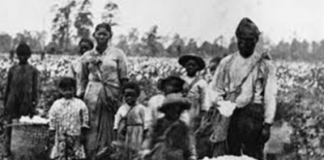
    In the period from 1820 to the Civil War the great profits which the New England factory owners accrued were dependent upon the fact that the owners paid women half of men’s wages, though they worked as hard and as long as men. But the super-profits the factory owners amassed were based upon slave labor in the South. The raw material, cotton, which the Northern manufacturers depended upon, was very cheap, owing to the    exploitation and oppression under which unwaged enslaved people labored.   

    Factory owners did not want slave labor in their mills. Millworkers bought everything they needed, and could not grow or make their own goods as they had done when they were on the farm. So, the Northern industrialists and merchants, boardinghouse owners and farmers did not want a workforce that had no money.

    They wanted workers to plough their wages back into the purchase of   commodities. They wanted the workers to send money home as remittances so the families that workers left “back on the farm” could pay off their mortgages or debts for new equipment or land.   Farmers and businessmen and bankers depended upon the cash nexus which enhanced their enterprises.  Slavery in the North would cut into profitability.

    The textile and other industries expanded Southern slavery.

    The expansion of slavery West and South involved US Army invasions and ethnic cleansing in the South.   The wars against the indigenous people and the Indian Removal Act spurred both the expansion of slavery and   the growth of the textile industry in the North.

    The wars enabled the extension of slavery and the growth of Cotton Kingdom. Conditions for the enslaved people deteriorated as the slavocracy doubled their land holdings and political power. The internal slave trade grew to provide more hands for the new cotton fields in the South and West, separating people from their loved ones, increasing the “breeding” of children for human trafficking  to distant plantations..

    Conditions and wages for industrial workers were also worsening as the mill owners’ profits were growing.  Slave holders were enriching themselves too, thanks to the US industrial revolution in textiles, and Britain’s increasing demand for US cotton.

    By the middle of the 19thcentury, the development of steamships, railroads and other infrastructure, called “Internal Improvements,” sent raw cotton and then textiles everywhere, to the North, West, and overseas. Cotton calico was durable and its tight patterns hid stains, so millions of farm and industrial women workers bought it and made their dresses from it.

    The new products of US industry were protected by tariffs hotly debated in Congress. Tariffs were always favorable to the manufacturers. The purpose of tariffs, taxes on goods coming into a country, was to make foreign goods more expensive than US-made ones.  These tariffs appeared to be the basis of the conflict between the ruling classes of the North and the South. Tariffs angered the leaders of the South where industrial development was rare, and many Congressional debates centered around them. The Southern planter class was angry that tariffs raised the prices of imported manufactured goods forcing Southern planters to buy the less-expensive Northern industrial goods like cloth and tools.

    The Political Economy of Slavery vs: Pre-Industrial Capitalism  

    If the ruling class in the South, the “Slavocracy,” had industrialized their region, they would have had their own manufactured goods, but that was impossible. The plantation system prevented the Southern ruling class from having enough available “liquid” capital to industrialize.   It was the slave system itselfthat made the South dependent on Britain or the North for manufactured goods.   Southern senators several times threatened to secede from the Union over tariffs. But their antiquated economic system was the cause of their problems.

    READ MORE: Beyond Twelve Years A Slave: What the United States Owes Black America

    It began to be clear to Northerners that slave labor in a growing capitalist economy was an anachronism. Neither enslaved people nor poor whites in the South could afford to buy any industrially-produced commodities. The South was economically a dead zone, where little commerce or industry could succeed, while the North was economically advancing both industrially and agriculturally, and expanding its infrastructure to advance commerce. Its population was larger and bought the new commodities the factory workers produced.

    New farm machinery and scientific agronomy were intensifying agricultural production in the Northeast and the Middle West.  New York, Pennsylvania and Ohio, the “breadbasket” Middle States, produced grains on large estates and family farms.  Northern industrialists and Northern farmers began to see that Southern slavery as unhelpful to their financial advancement. They could not sell much to the South. The South was agriculturally self-sufficient, consuming their own grains, greens, and hogs.  The industrialists could not make a profit from a region of the US where abject poverty ruled. When the depressions- the Panics of 1837, the economic downturn of the 1840s, and the Panic of 1857 hit, the South was slow to recover.

    The North was dominated by businessmen, and in the North, working classes bought cloth and bonnets, shoes and books, while Northern farmers bought the new improved farm equipment, clocks, tools or calico or anything being produced in those Northern factories. Free workers and free-soil farmers’ cash could pay for these commodities.  In the South, only the Planter class was wealthy, and they bought mostly luxuries for themselves, and cheap tools for the enslaved to use.The enslaved people, always managed to “lose” or break these tools, and that was a mark of ongoing resistance to slavery throughout the South.

    Source: https://face2faceafrica.com

    Northern capitalists and British bankers or textile industries essentially controlled the Southern economy.  Planters were usually in debt to Northern or British bankers.   In what historian Eugene Genovese described as thePolitical Economy of Slavery[1], amongst Southern ruling class, capital was “frozen.” Their actual money was sunk in buying and maintaining their enslaved Black people, buying luxuries, paying back debts, and buying new land to expand the Cotton Kingdom. Plantation land was literally used up by cotton farming, and the soil was useless after a few seasons. They did not teach the enslaved people modern methods of soil improvement because they did not teach enslaved people anything that might enhance their knowledge and lead to escape.

    Wars against the Indigenous for the extension of slavery

    The Planters got land when the US government passed laws to remove “Indians.” And with every military incursion against the indigenous, they took the fertile acres the government acquired for them for the expansion of the Cotton Kingdom.

    This planter class was responsible for promoting every ante-bellum US war:  The War of 1812, the Seminole Wars in Florida(1817–18, 1835–42, 1855–58), and the Mexican War (1846-48).  US always claimed they were under attack by “Savage Indians.” The US Army made wars for the Slavocracy, and justified US colonization and white settlement of the continent as advancements for “civilization.”

    Slavery, the system, was connected to everything in the United States. The US army killed Indigenous People to enlarge the Cotton Kingdom.  Laws were created to expand it. Indigenous were exiled from their homelands to enrich the Slavocracy.  Andrew Jackson even flouted a Supreme Court ruling, Worcester v. Georgia, which said that the 1830 Indian Removal Act by which the US army forcibly removed over 100,000 indigenous peoples from their lands, was unconstitutional. Jackson’s refusal to abide by the Court’s decision produced the Trail of Tears, the ethnic cleansing the South of the major Indigenous nations of the region, causing the deaths of 4000 Cherokee, 8000 Muscogee (Creek), 500 Seminole, 500 Chickasaw, and 2000 Choctaw people. Over 15,000 indigenous people died on these death marches.  Those surviving faced forced migration to Oklahoma, so Southern planters could grab land for the expansion of slavery and the cotton kingdom. [2]

    This was how the Constitution worked.   The army worked for the slavocracy to invade and seize territory. The Slavocracy ran the government. They got what they wanted, except for the tariff laws.

    Transportation advancements, and Internal Improvements -like New York’s Erie Canal and railroads – transported the commodities enslaved Africans produced, as well as the goods and crops Northern farmers and industrial workers made.  Steamships enabled the growth of coastal and internal river commerce, including the internal slave trade, and carried people away from their loved ones forever. By the 1850s, hundreds of thousands of enslaved people were routinely torn from their families and moved South and West by railroad.

    A former slave wrote:

    “While the cars were at the depot, a large crowd of white people gathered, and were laughing and talking about the prospect of negro traffic; but when the cars began to start and the conductor cried out, ‘All who are going on this train must get on board without delay,’ the colored people cried out with one voice as though the heavens and earth were coming together, and it was so pitiful, that those hard hearted white men who had been accustomed to driving slaves all their lives, shed tears like children. As the cars moved away, we heard the weeping and wailing from the slaves as far as human voice could be heard; and from that time to the present I have neither seen nor heard from my two sisters, nor any of those who left Clarkson depot on that memorable day.”

    My Life in the South, by Jacob Stroyer.[3]

    *

    Note to readers: please click the share buttons above or below. Forward this article to your email lists. Crosspost on your blog site, internet forums. etc.

    Notes

    [1] Eugene D. Genovese, The Political Economy of Slavery: Studies in the Economy and Society of the Slave South,

    Wesleyan University Press, 2014

    [2] Elizabeth Prine Pauls, (Trail of Tears.) https://www.britannica.com/event/Trail-of-Tears 

    [3] Susanna Ashton I Belong to South Carolina: South Carolina Slave Narratives, University of South Carolina Press, 2010.

    Featured image is from https://unzippingthepast.weebly.com

    The original source of this article is Global Research Copyright © Heather Cottin, Global Research, 2020